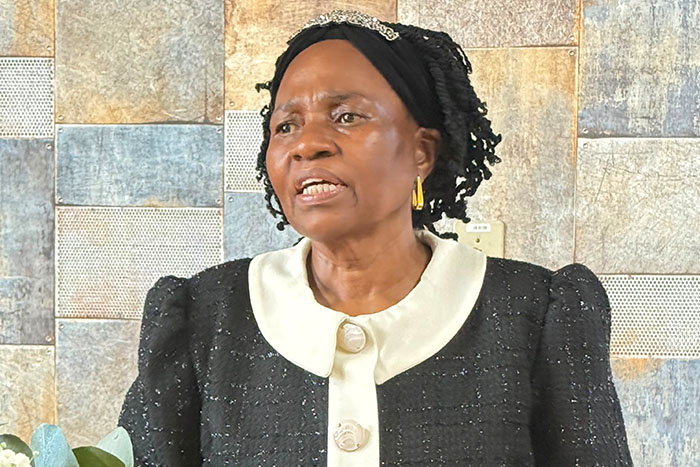
The minister of education in Mpumalanga delivered the keynote address at the opening of the National Association for Schools of Technology (NAST) conference at the HTS Witbank in Emalahleni.
The conference ends on 17 July.
Here is the address in full:
We are grateful to participate in this important occasion of the National Association for Schools of Technology (NAST) here in eMalahleni. We wish to extend our profound appreciation to LDEK Consulting and NAST for convening this strategic platform under the theme: “Preparing Tomorrow Through Skills.”
This theme speaks directly to the aspirations of our country, as articulated in the National Development Plan (NDP) 2030, which calls for a skilled, capable, and innovative workforce to drive economic growth, industrialization, and inclusive development. We share a firm conviction that the future of South Africa will not be secured by theory alone, but through practical skills, technical competencies and the innovative capacity of our young people. It is for this reason that the current 7th Administration is intentional and deliberate in positioning Mathematics, Science, and Technology at the centre of our education system. Our strategy for advancing Technology education in schools is anchored on the following key pillars:
Firstly, early exposure to technical and vocational learning, ensuring that learners are introduced to practical and skills-based subjects from the Intermediate and Senior Phases. This approach cultivates curiosity, creativity, and problem-solving skills from a young age. The modernization of subject offerings in our Schools of Technology, ensuring alignment with current and emerging sectors such as energy, mining, manufacturing, construction, and the digital economy. In addition, is the improvement of school infrastructure and provisioning of relevant resources to equip schools with functional workshops, modern machinery and digital tools that reflect real industry environments.
This includes intensified teacher development, ensuring that educators are continuously upskilled to deliver industry-relevant content using modern technologies and innovation. This will yield to expanding access and participation, particularly for learners from rural and township schools, to ensure that no learner is excluded from opportunities in technical education. To achieve all these objectives we need to deepen partnerships with industry and stakeholders, to ensure that our curriculum remains relevant and that learners are exposed to real workplace environments through experiential learning opportunities.
Programme Director, it is within this context that we wish to place on record our profound appreciation to the visionary leadership of SASOL. SASOL has overtime demonstrated a consistent and tangible commitment to support education delivery and skills development in Mpumalanga. Through its bursary programmes, STEM support initiatives, artisan development, and learnership programmes, SASOL continues to open doors for deserving learners and strengthen the pipeline of future scientists, engineers, and innovators.
We are particularly encouraged by SASOL’s role in producing skilled artisans who are essential for the functioning and growth of our economy.
Their support is impactful, changing lives, strengthening education delivery, and building the future workforce of our province and our country. We commend SASOL as a model of what effective public-private partnership should look like. We also acknowledge the many other industry players from mining, energy, manufacturing, and construction who continue to invest meaningfully in education. Siyabonga kakhulu.
Programme Director, one of the persistent challenge in our system has been the fragmentation between basic education and post-school opportunities especially that which technology has to offer. We therefore need to use platforms such as this one to discuss how to close this gap through structured collaborations with institutions of higher learning. We must continue to align curriculum delivery, strengthening career guidance, and creating clear pathways for learners to transition into further education, apprenticeships, and employment.
Let this platform explore opportunities that Artificial Intelligence can bring into this space. We must intensify advocacy in this regard and ensure that the majority of our communities benefit from these new trends.
Let us ensure that we are not overtaken by events but move with time in this regard.
The Provincial Government has entered into a collaboration agreement with the University of Mpumalanga to:
• Promote sustainable agriculture and innovation;
• Enhance skills development for government employees;
• Support environmental sustainability and eco-tourism;
• Advance healthcare research and community programmes;
• Foster entrepreneurship and job creation;
• Strengthen education through teacher development and curriculum support; and
• Improve service delivery through technological innovation.
This is aligned with our vision of building a seamless system where a learner can move confidently from school to any institution of higher learning from there to the workplace and ultimately into sustainable livelihood for all. We are determined to ensure that each of the 71 circuits in our Province has at least one fully functional Technical High School, like the HTS hosting this Conference.
To date, 26 circuits still need to benefit from this vision, and we remain committed to closing this gap. I wish to extend an open invitation to everyone to help us achieve this goal in our lifetime. I am open to any engagement that seeks to ensure that we attain this goal. Please call me.
Programme Director, as we advance technology in our schools, we must reaffirm the central role of Mathematics, Science, and Technology.
We have implementing a comprehensive framework to improve participation and performance in these subjects, focusing on:
• Strong foundational numeracy;
• Increased learner uptake beyond Grade 9;
• Continuous teacher development; and
• Structured learner support programmes.
This demonstrates that with the right interventions, support, and commitment, success is indeed achievable.
Programme Director, we must also confront the critical challenge of language in advancing the teaching of this subject. Many learners are required to engage with complex technological concepts in a language that is not their mother tongue, creating barriers to comprehension.
As a province, we are advancing Mother Tongue-Based Bilingual Education to ensure that learners develop conceptual understanding in a familiar language, while also gaining proficiency in the language of learning and teaching. We therefore urge this Conference to engage robustly on how language can be better integrated into the teaching of Technology.
It must be possible for our children to learn these concepts in isiNdebele, Siswati and other indigenous languages. Distinguished delegates, we draw inspiration from the words of President Cyril Ramaphosa, who stated:
“Education is the most powerful instrument we have to transform society and build a capable, developmental state.”
These sentiments remind us that the work we do in classrooms, workshops, and laboratories is about nation-building. I am delighted that in organising this conference , you worked with our tean from the OR Tambo Mathematics, Science and Technology Academy. That institution stands as a beacon of hope and there must be a deliberate resolution fromthis Conference that you will work together ,intentionally to ensure that the Academy becomes a leaver for promoting technology in our Province. This province must lead all other provinces because of this Institution, please make it work to improve the lives of the citizenry of this Province-the Place of the Rising Sun.
Mpumalanga is one of the few provinces with 101 Secondary Schools designated to teach Mathematics and Physical Sciences on compulsory basis for all learners.
This bold intervention seeks to expand access and strengthen the pipeline into technical, technology and engineering careers.
Programme Director, beyond improved school infrastructure and policy pronouncements, we must change mindsets.
We must dismantle the notion that Technology is a lesser pathway and affirm it as a powerful route to the restoration of our dignity, realization of equity and total emancipation of everyone, young and old.
This Conference must be a platform for action and to:
• Strengthen partnerships between government, industry, and education institutions;
• Advance innovation in technical education;
• Promote skills aligned to economic needs; and
• Place the learner at the centre of all we do.
We remain steadfast in our commitment to building a capable, skilled, and employable generation.
We will continue to work with NAST, industry partners, TVET Colleges and higher education institutions to ensure that our education system responds effectively to the needs of our economy. As you engage over the coming days, we invite you to experience the beauty of Mpumalanga—the Place of the Rising Sun.
We encourage you to explore our landscapes, culture, and hospitality, and to return with your families as ambassadors of our province.
In closing, allow me to thank NAST, LDEK Consulting and all partners for organizing this important Conference.
I will be grateful to receive a report on the outcomes or resolutions of this Conference, remember, I am a phone call away.
Let us move forward with a shared commitment to prepare tomorrow through skills, to empower our learners, and to build a prosperous South Africa.
Ngiyabonga.
